


The most intense single-lap discipline in endurance racing took center stage today with the running of the 2026 Le Mans 24h Hyperpole session. Image: 24h-lemans
Following yesterday’s high-stakes opening qualifier, only the 15 fastest cars from the Hypercar, LMP2, and LMGT3 categories earned the right to return to the 13.626 km Circuit de la Sarthe. With heavy multi-class traffic eliminated and the asphalt benefiting from peak track evolution and rubber buildup, engineers adjusted engine mapping and aerodynamic configurations to their absolute limits for this high-stakes shootout.
The format divides the session into two distinct phases: Hyperpole 1 (H1) and Hyperpole 2 (H2).
During the initial 20-minute H1 phase, all 15 qualified entries across the fields fight against the clock, with only the 10 fastest cars transferring to the decisive 15-minute H2 round.
This final shootout ultimately determines the first 10 grid slots for Saturday’s 24-hour race. Operating under a highly restricted duration, teams must deploy precise energy management strategies, leaving it to the drivers to extract maximum tire performance across a narrow three to four lap threshold.
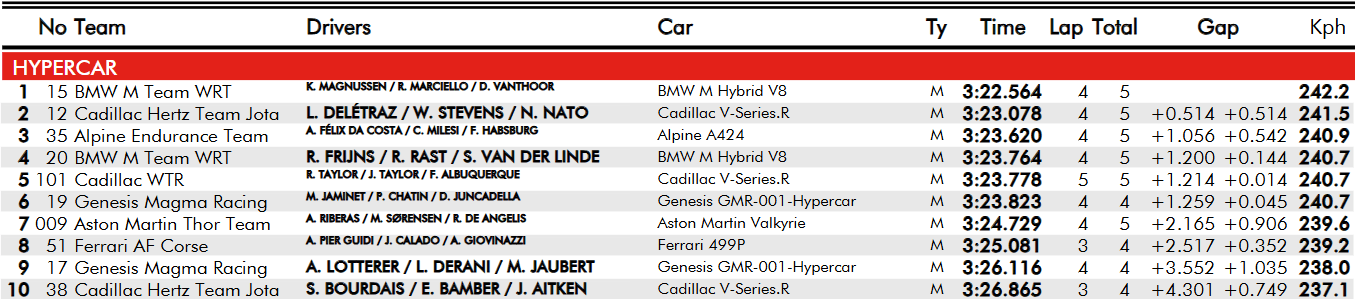
2026 Le Mans 24h Hyperpole Hypercar results
Pre-event technical theories were officially validated as the LMDh platform outright outperformed its LMH counterparts during the premier-class shootout. The opaque veil surrounding the Balance of Performance (BoP) parameters slowly vanished throughout the running, with only two LMH-specification machines, the #51 Ferrari 499P and the #009 Aston Martin Valkyrie, managing to advance into the decisive H2 phase. Most notably, predicted heavyweight contender Toyota suffered a severe setback, witnessing both factory GR010 Hybrids knocked out prematurely and languishing over a full second off the ultimate pace.
The initial H1 session delivered substantial surprises down the order, heavily altering the expected hierarchy. Charles Milesi in the #35 Alpine A424, and more remarkably, Mathys Jaubert piloting the brand-new #17 Genesis GMR-001, stunned the paddock by consistently matching the front-runners and locking in top-three times to transfer into the final segment.
Deprived of two-thirds of the LMH field and running in cool 3°C ambient temperatures, the final H2 session started conservatively. The depleted field initially registered staggered lap times behind Dries Vanthoor in the #15 BMW M Hybrid V8, who set the early reference around the 13.626 km layout at 03:22.745, a marker that was surprisingly over 0.600 seconds slower than Milesi’s absolute baseline from H1.
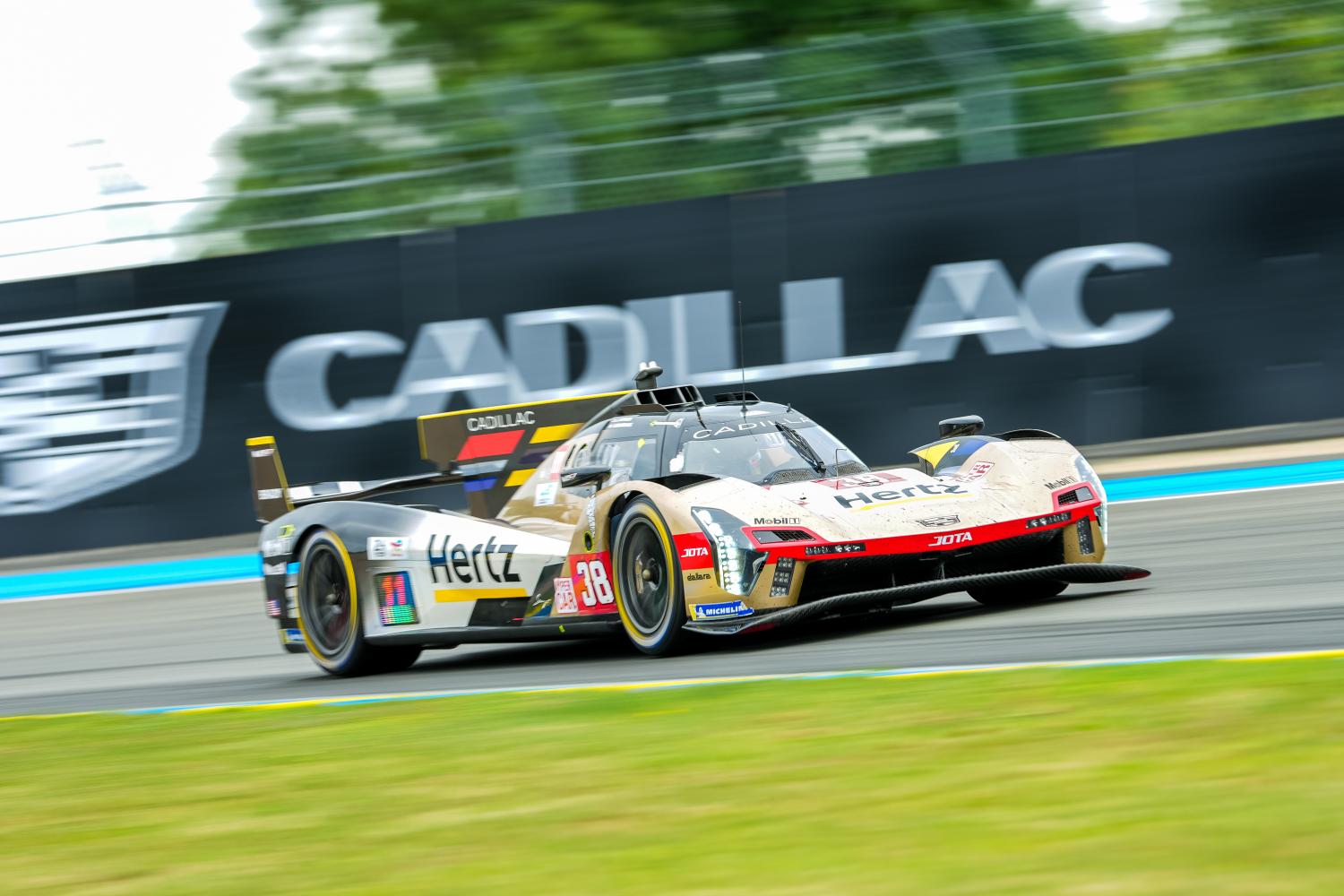
As the track rubbered in, Vanthoor trimmed an additional three-tenths from his benchmark, yet his effort was eclipsed just 30 seconds later by a blistering lap from Jack Aitken of 03:22.559: a new record for the Hypercar category. Piloting the #38 Hertz Team JOTA Cadillac, Aitken snatched the provisional top spot by a razor-thin margin of 5 milliseconds. The sister JOTA entry and last year’s pole-sitting machine, the #12 of Will Stevens, consolidated the American manufacturer’s strength by securing third, directly behind the split-strategy #15 BMW of Team WRT.
Ferrari endured a disappointing outing, unable to perform and leaving the sole remaining #51 Ferrari 499P stranded down in P9, behind the Aston Martin #009, the best classified LMH car.
Just 10 minutes following the conclusion of the podium ceremony, a massive turn of events reshaped the grid when race commissioners announced the post-session disqualification of the pole-sitting car.
The #38 Hertz Team JOTA Cadillac of Jack Aitken was penalized for an unsafe release into the pit lane fast lane during the opening moments of the decisive Hyperpole 2 phase. The severe infraction strips the Anglo-American outfit of its hard-earned top spot and relegates the #38 Cadillac to the rear of the Hypercar field. Consequently, the #15 Team WRT BMW M Hybrid V8 of Dries Vanthoor inherits the official overall pole position for Saturday’s 24 Hours of Le Mans.

2026 Le Mans 24h Hyperpole LMP2 results
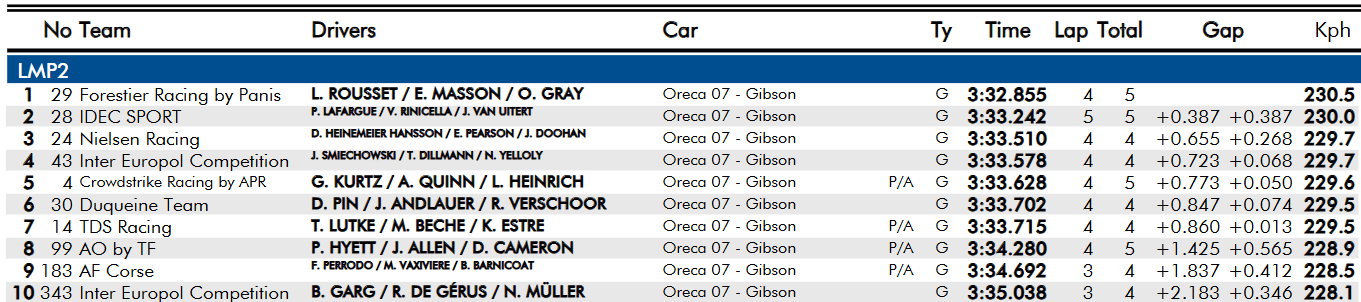
The LMP2 competitors operated at absolute thermal and mechanical limits during the decisive H2 phase. Tom Dillmann delivered a stunning performance piloting the #43 Inter Europol Oreca 07, eclipsing last year’s pole benchmark by nearly a full second to post a 03:33.762. Conversely, it was a session defined by frustration for United Autosports, as both of Zak Brown’s entries suffered premature eliminations during the initial H1 segment.
The preceding Hyperpole 1 session witnessed intense multi-car skirmishes before reigning European Le Mans Series champion Esteban Masson unleashed a masterclass lap. Masson guided the #29 Forestier Racing by Panis Oreca 07 to a commanding 0.387 second advantage over the #28 IDEC Sport, reinforcing his outright pace advantage displayed throughout the week by lapping the Circuit de la Sarthe in a blistering 03:32.855, lowering the previous lap record by an impressive 1.802 seconds.
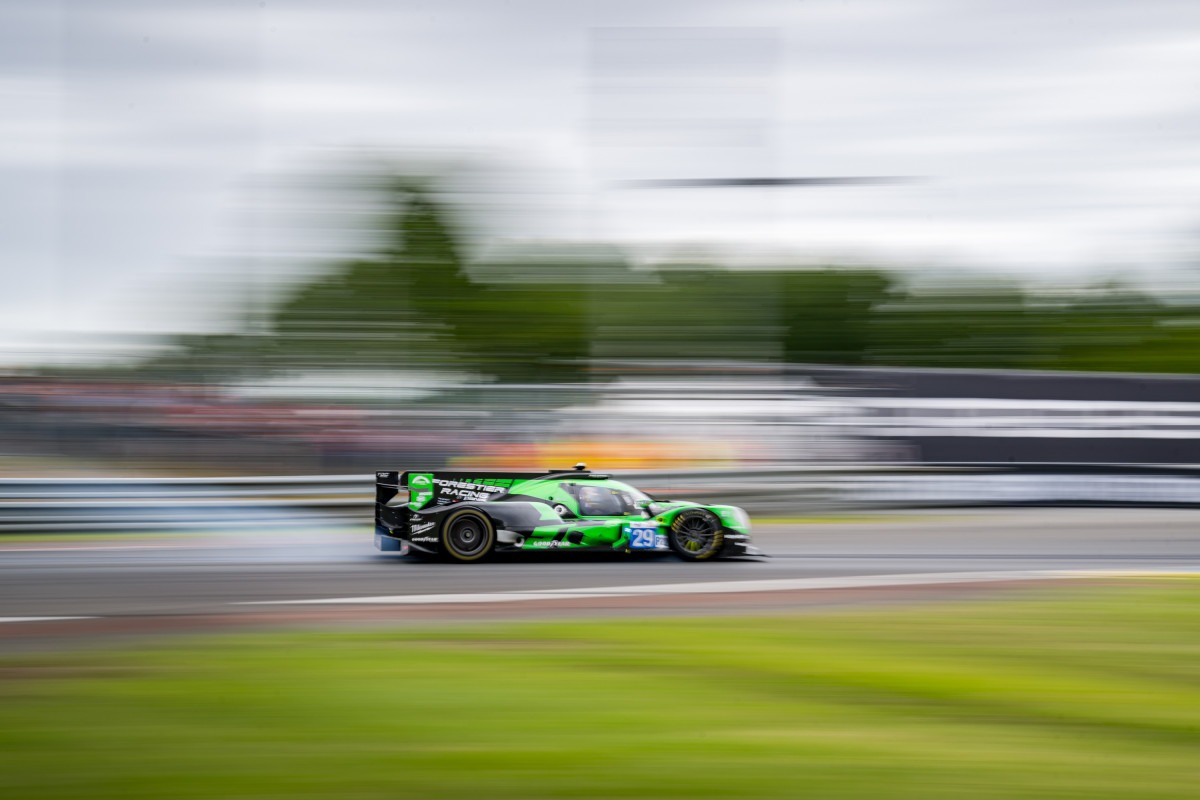
However, the provisional results were quickly overturned post-session. Race control issued a one-place grid penalty to the #29 Oreca 07 for impeding an LMGT3-class McLaren on a flying lap. As a result of the infraction, the #28 IDEC Sport entry was promoted to the official top spot.

2026 Le Mans 24h Hyperpole LMGT3 results
The production-based ranks faced immediate technical and operational drama 22 minutes into the session when the #91 Manthey Racing Porsche 911 GT3 R was placed under official investigation for a total powertrain energy breach. Compounding the team’s difficulties, the sister Manthey entry struggled for baseline grip, finishing adrift at the bottom of the H2 order and matching a two-second deficit to the front-runners.o
Track limits and high-speed stability proved costly elsewhere; the #54 Vista AF Corse Ferrari 296 LMGT3 Evo suffered a severe off-track excursion at Tertre Rouge. The resulting impact heavily compromised the vehicle’s aerodynamic floor and diffuser package, leaving the crew with just a single compromised flying lap that yielded a disappointing 14th on the grid. Meanwhile, the Mercedes-AMG LMGT3 program faced an underwhelming afternoon as all Iron Lynx-operated entries were eliminated during H2, underlining the current performance deficit of the Stuttgart machinery around this layout.
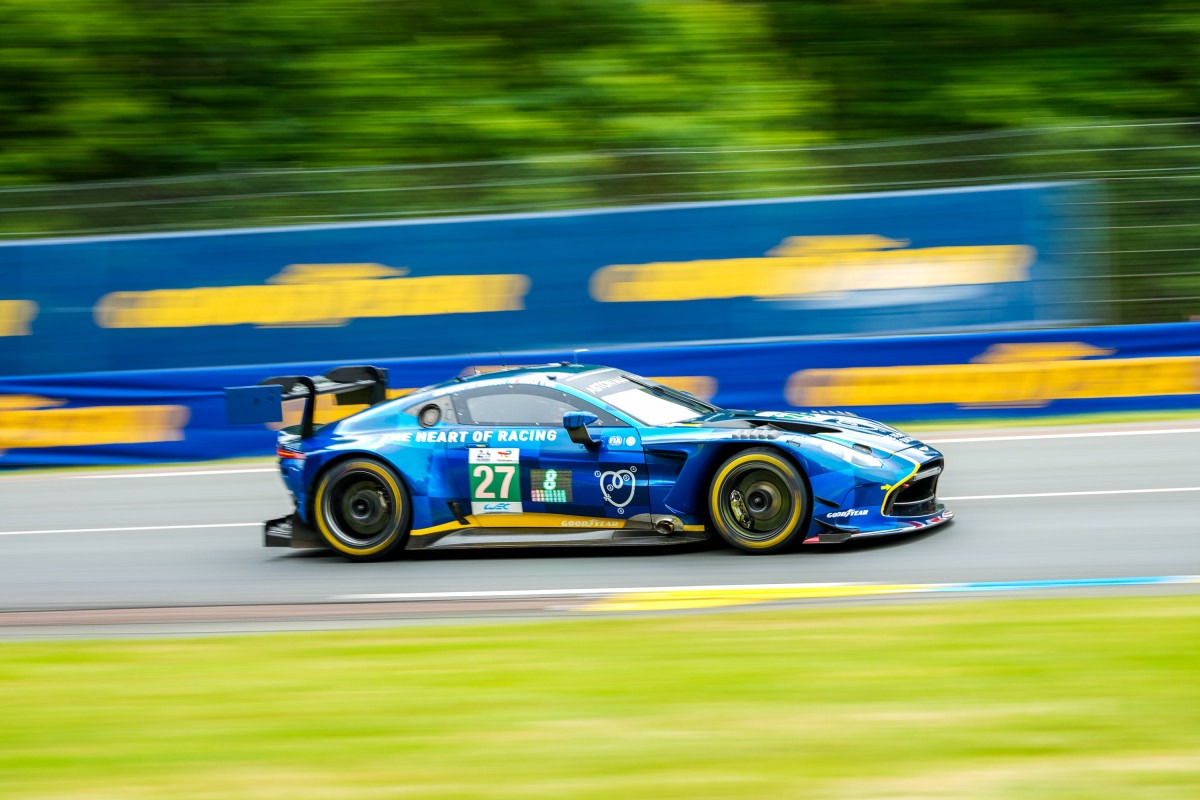
In the early stages of H1, factory driver Mattia Drudi dictated the pace by placing the #27 Heart of Racing Aston Martin Vantage LMGT3 at the summit of the timesheets, lowering the previous class lap record by 0.356 seconds and securing a back-to-back pole pisiton. Drudi’s benchmark left the field reeling, with Alessio Rovera’s #21 AF Corse Ferrari facing a substantial gap of nearly a second in second place, narrowly clear of the #87 Akkodis ASP Team Lexus RC F LMGT3.

